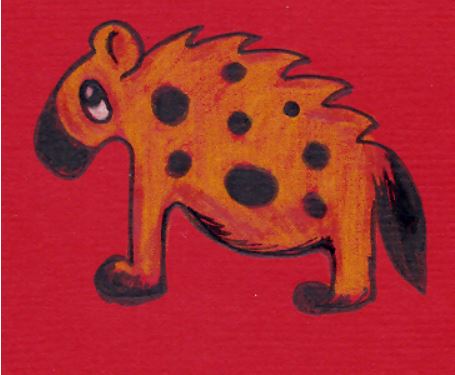

The members of the Hyaena Specialist Group have concluded that one of the largest obstacles to hyaena conservation is the negative image most people hold about hyaenas. We believe this negative image represents an unfair stereotype of hyaenas, which are in reality fascinating, intelligent and even beautiful creatures. Unfortunately, however, a positive image is not the one at the forefront of the public imagination. According to University of California, Berkeley, biologist Stephen Glickman, when Disney animators went to his hyena research facility to make sketches for The Lion King, scientists there made a plea for showing the predators in a more positive light—but the trio of hyenas in the movie reinforce the common stereotype of hyaenas as cowardly, skulking low-lifes.
A few examples of hyaenas’ public relations challenges are listed below:
- African legends and folklore associate the hyena with witchcraft and the supernatural. The spotted hyena is to Africa what the black cat is in the U.S. — the premier witch animal, uncanny and terrifying. Hyenas are considered a favorite mode of transportation for witches in Tanzania and India.
- Sudanese folklore and Persian medical writings from the 14th century warn of a combination man and hyena, similar to a werewolf, who attacks people under cover of darkness.
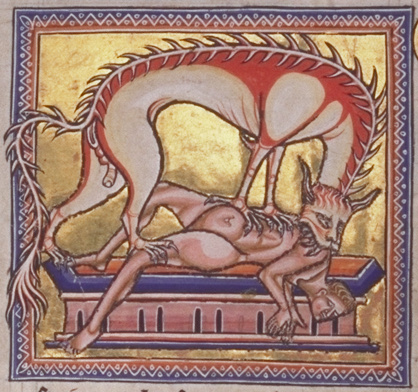
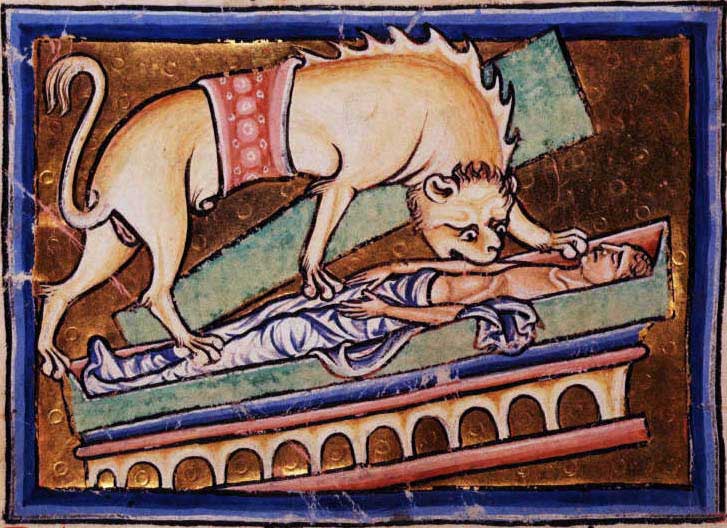
- In the Middle Ages, hyenas were believed to dig up and consume human corpses.
- In Green Hills of Africa (1935), Ernest Hemingway wrote about “Fisi, the hyena, hermaphroditic self-eating devourer of the dead, trailer of calving cows, ham-stringer, potential biter-off of your face at night while you slept, sad yowler, camp-follower, stinking, foul, with jaws that crack the bones the lion leaves, belly dragging, loping away on the brown plain . . . “

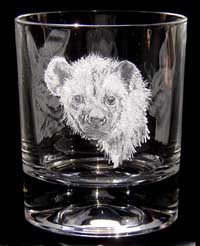
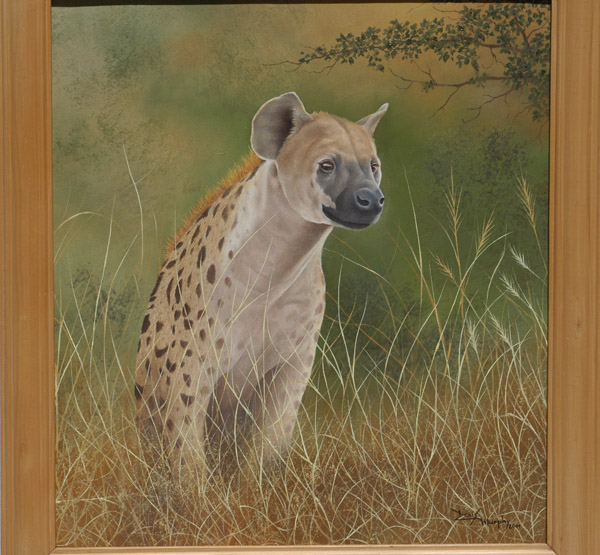
A number of modern artists depict hyaenas in a favorable light (see examples below). However, a new Hollywood film entitled “Hyenas” has just been produced (in 2007) by Entertainment Lab that promises to move the lay person’s perception of hyaenas in a negative direction. Here is the Overview from the film’s website: “Hyenas” the movie is an urban legend detailing accounts of human encounters and attacks by a sub-culture of predatory cryptohuman Hyenas. These shape-shifting human-like creatures prowl the rural back roads and forests of North America and have long been thought to exist by Cryptozoologists. Folklore and sightings persist even as mainstream science denies their existence. But these fierce creatures with bone crushing jaws and an appetite for human flesh are real and live up to the fierce reputation of their cousin, the African Spotted Hyena. A dozen snarling, fighting crypto Hyenas can devour an adult human — skeleton and flesh — in a matter of minutes.”
This film will surely not help us conserve hyaenas!
For more on how hyaenas have been viewed throughout human history, read Glickman, S.E. (1995) The spotted hyaena from Aristotle to the Lion King: Reputation is everything. Social Research 62:501-537.
Early depictions of hyaenas.


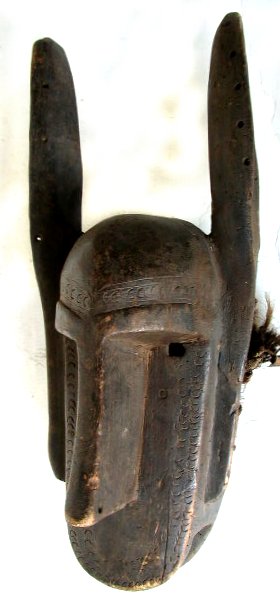

Wood with black pigment, horse hair.
(22 1/2″h x 7″w x 7″ d.),
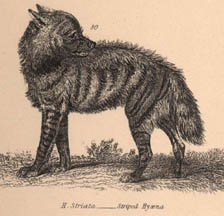
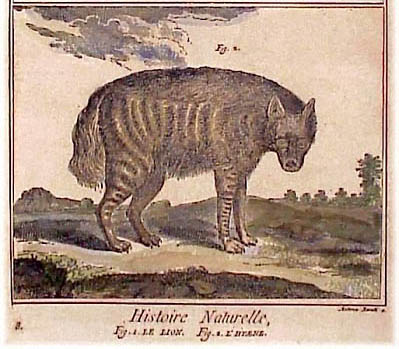
Contemporary depictions of hyaenas.

Brown hyaena sculpture by Donald Greig. Photo courtesy of Gus Mills.


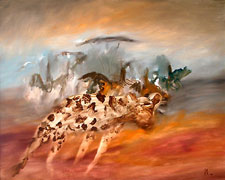

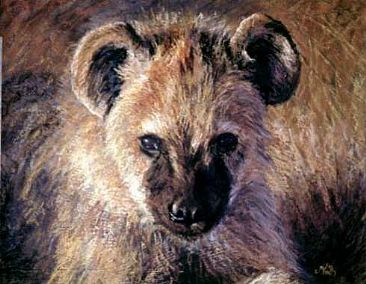

Dimensions (inches): 12 x 16