

Why do red admiral butterflies disappear when the cold weather blankets the landscape? Is there a secret sanctuary for red admiral butterflies in Hawaii?
Red admiral butterflies embark on an exciting journey of survival during the brisk winter months. The winged wonders are not only visible, but also employ intricate strategies to fight off the cold. Red admirals are unique in their ability to adapt to physiological changes due to their strategic hibernation locations, as well as their ability to withstand icy conditions.
As we learn about their winter behavior, we will learn about migration, hibernation, and the intricate dance of survival. Learn about the threats these butterflies face as well as the conservation efforts that are dedicated to their health as you embark on a scientific study and citizen science campaign. Red admiral butterflies, hidden beneath the snow, can be discovered during the winter months, as we look through the snowy canopy for the delicate ballet that unfolded beneath them.
Overview
Nestled within the intricate tapestry of nature’s wonders, the red admiral butterfly emerges as a captivating subject of exploration. This overview embarks on an insightful journey, unraveling the mysteries encapsulated within the delicate wings of these enchanting creatures.
A. Introduction to Red Admiral Butterflies
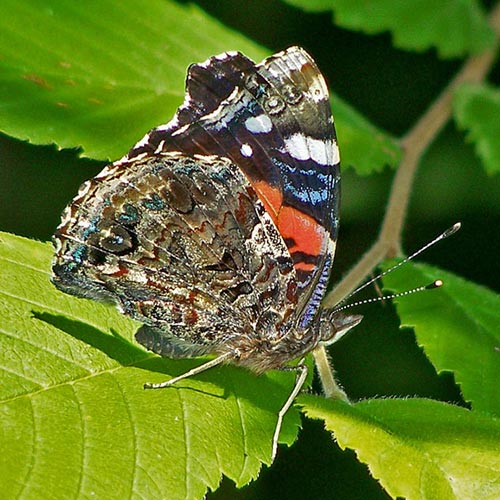
The red admiral butterfly, scientifically known as Vanessa atalanta, graces our landscapes with its striking beauty. Sporting deep-red bands on its dark wings, accented by vibrant orange markings, this species stands out amidst the foliage. Its wingspan, ranging from 2 to 2.75 inches, showcases a delicate yet commanding presence. Found in various parts of the world, from North America to Europe, Asia, and Africa, the red admiral boasts a widespread habitat that enriches ecosystems across continents.
B. Life Cycle Recap
Stages of the Red Admiral Butterfly Life Cycle
- Egg: The life cycle commences with the female red admiral laying eggs on host plants, such as nettles, forming the foundation of the journey.
- Larva: Hatching into voracious caterpillars, the larvae feed on host plants, undergoing several molts as they grow.
- Pupa: The transformative chrysalis stage follows, encapsulating the metamorphosis from caterpillar to butterfly.
- Adult: The emergence of the adult butterfly completes the cycle, ready to partake in the intricate dance of life.
Importance of Each Stage
- Ecological Balance: The red admiral contributes significantly to ecosystem balance, serving as both pollinator and prey for various species.
- Biodiversity: Understanding the life cycle aids in appreciating the biodiversity red admirals bring to their habitats, fostering a harmonious coexistence.
C. Significance of Seasonal Adaptations
General Butterfly Behavior in Winter
- As winter casts its chilly embrace, red admirals showcase remarkable adaptability.
- Unlike some species that migrate to warmer climates, red admirals display unique strategies, including hibernation, to endure the cold.
Importance of Understanding Winter Behavior for Conservation Efforts
- Conservation efforts hinge on comprehending how red admirals navigate winter’s challenges.
- Scientists and enthusiasts alike delve into the intricacies of their winter behavior, aiming to bolster conservation initiatives.
In essence, this exploration into the red admiral butterfly’s realm serves as an ode to the intricate balance of nature. From the fleeting beauty of their wings to the nuanced stages of their life cycle, each facet contributes to the rich tapestry of biodiversity. As we unravel the secrets encapsulated within their seasonal adaptations, a deeper understanding emerges, guiding us toward more effective conservation endeavors.
Red Admiral Butterflies in Autumn
Autumn, a season of transition, unfolds a captivating chapter in the life of red admiral butterflies, marked by migratory marvels and strategic preparations for the impending winter chill.
A. Migration Patterns
Overview of Migration
- As autumn hues paint the landscapes, red admiral butterflies embark on a remarkable journey, showcasing their innate migratory instincts.
- This migration is not a mass exodus but a delicate ballet, adding a touch of ethereal beauty to the seasonal canvas.
Red Admiral Butterfly Migration Specifics
- The migration of red admirals is a spectacle, with these winged wanderers covering vast distances in search of suitable wintering grounds.
- Unlike some butterfly species that opt for warmer climates, red admirals exhibit a unique pattern, adapting to the changing environmental dynamics.
Factors Influencing Migration
- Temperature Sensitivity: Red admirals are attuned to temperature changes, triggering their migration as autumn temperatures begin to drop.
- Resource Availability: The availability of nectar-rich flowers and suitable host plants influences their migration, ensuring a sustainable journey.
- Daylight Duration: The diminishing daylight hours act as a natural cue, prompting red admirals to commence their migratory endeavors.
B. Feeding and Reproduction
Last-Minute Feeding Before Winter
- As autumn signals a shift in conditions, red admirals engage in last-minute feeding, replenishing their energy stores for the challenging winter ahead.
- This strategic feeding serves as a crucial survival tactic, ensuring they enter the colder months with sufficient reserves.
Reproductive Behaviors in Autumn
- Autumn isn’t merely a time for migration; it’s also a season of reproductive preparations for red admirals.
- Courtship rituals unfold, with male red admirals actively seeking mates and engaging in intricate displays to win over potential partners.
In the intricate dance of nature, the autumnal journey of red admiral butterflies is a testament to their adaptability and resilience. The migration, guided by temperature cues and resource availability, adds a poetic rhythm to the changing seasons. As these winged creatures engage in last-minute feasts and courtship rituals, they showcase a meticulous approach to ensuring the survival of their species. The intricacies of red admiral behavior in autumn not only contribute to the grandeur of nature’s spectacle but also offer insights into the delicate balance that governs the lives of these enchanting butterflies.
Winter Survival Strategies

In the hushed tranquility of winter, red admiral butterflies unveil a masterful display of survival strategies, navigating the frosty landscape with a delicate precision that belies their fragility.
A. Hibernation Process
Selection of Hibernation Sites
- Amidst the chill of winter, red admirals meticulously choose their hibernation sites, displaying an innate understanding of environmental cues.
- Environmental Factors Influencing Selection:
- Altitude: Red admirals often select elevated locations, leveraging the insulating properties of higher altitudes.
- Sheltered Nooks: Seeking shelter in nooks of trees or structures protects them from harsh winds, preserving energy reserves.
- Group Dynamics: These butterflies often hibernate in clusters, a strategic choice amplifying their collective warmth and protection.
Physiology of Hibernation
- Red admirals undergo physiological changes during hibernation, adapting to the cold in ways that ensure their survival.
- Metabolic Slowdown: Metabolism decreases significantly, allowing them to conserve energy over the extended hibernation period.
- Antifreeze Proteins: Remarkably, red admirals produce antifreeze proteins, preventing ice formation within their bodies and safeguarding delicate tissues.
B. Adaptations to Cold Weather
Physical Characteristics Aiding in Cold Weather
- Dark Wing Coloration: The dark hues of their wings absorb sunlight, providing a passive heating mechanism crucial for maintaining optimal body temperature.
- Thermal Regulation: The ability to bask in the occasional winter sun allows red admirals to regulate their body temperature, a critical factor in surviving the cold.
Behavioral Adaptations for Survival
- Torpor and Activity Cycles: Red admirals alternate between torpor, a state of reduced physiological activity, and short bursts of activity during milder winter days.
- Microclimate Selection: By navigating microclimates, such as the south-facing sides of structures or trees, red admirals capitalize on pockets of warmth in the otherwise chilly environment.
As winter weaves its icy tapestry, red admirals, seemingly delicate, exhibit an intricate dance of resilience and adaptability. Their hibernation process, marked by thoughtful site selection and physiological adjustments, stands as a testament to the wonders of nature’s engineering. Physically, their dark wing coloration and strategic thermal regulation showcase evolutionary marvels that aid in braving the cold. Behaviorally, the oscillation between torpor and activity, coupled with shrewd microclimate selection, unveils a survival strategy that is nothing short of ingenious.
In the realm of winter survival, red admirals don’t merely endure; they thrive. Their strategies, a delicate fusion of environmental awareness and biological mastery, underscore the profound resilience embedded within the intricate ecosystem they inhabit.
Monitoring Red Admirals in Winter
In the silent frost of winter, the intricate world of red admirals continues to unfold, and our understanding deepens through a combination of rigorous scientific studies and the invaluable contributions of citizen science initiatives.
A. Scientific Studies
Overview of Research on Red Admiral Butterflies in Winter
- Scientific inquiry into the winter behavior of red admirals has unraveled a tapestry of insights, shedding light on the nuances of their survival strategies.
- Research Focus Areas:
- Migration Patterns: Studies delve into the specifics of red admiral migration during winter, unraveling the routes and destinations of these delicate travelers.
- Physiological Adaptations: Researchers scrutinize the physiological changes red admirals undergo during winter, uncovering the mechanisms behind their ability to endure the cold.
- Data Collection Methods:
- Utilizing advanced tracking technologies, scientists monitor individual butterflies, providing a comprehensive understanding of their movement patterns.
- Analysis of environmental factors, such as temperature and habitat conditions, contributes to a holistic grasp of the red admiral’s winter ecology.
Key Findings and Insights
- Thermal Regulation Mastery: Research reveals the red admirals’ exceptional ability to regulate body temperature during winter, a crucial factor in their survival.
- Microclimate Navigators: Findings highlight the butterfly’s adeptness in selecting microclimates that offer pockets of warmth, showcasing a strategic approach to enduring the cold.
B. Citizen Science Initiatives
Involvement of the Public in Monitoring Red Admirals
- Citizen scientists play an integral role in monitoring red admirals during winter, offering a vast network of observers that extends beyond traditional research capabilities.
- Observation and Reporting: Engaged individuals observe and report red admiral sightings, contributing valuable data on behaviors, locations, and population dynamics.
- Photographic Documentation: The public’s ability to capture and share photographs aids in identifying individual butterflies, enabling researchers to track specific specimens over time.
Importance of Community Participation in Data Collection
- The collective efforts of citizen scientists amplify the scope of data collection, providing a more comprehensive understanding of red admirals in winter.
- Biodiversity Mapping: Community participation allows for the creation of biodiversity maps, illustrating the distribution of red admirals in various regions during winter.
- Conservation Impact: Involving the public fosters a sense of environmental stewardship, creating a collective responsibility for the conservation of red admiral habitats.
As winter casts its spell, the collaborative dance between scientific studies and citizen science initiatives illuminates the mysteries of red admirals in their hibernation sanctuaries. From laboratories to backyards, the pursuit of knowledge transcends boundaries, revealing the delicate yet resilient nature of these captivating butterflies. Through this synergy of expertise and community engagement, the ongoing narrative of red admirals in winter unfolds, creating a richer tapestry of understanding that transcends the boundaries of scientific inquiry alone.
Human Impact and Conservation

In the delicate ballet of nature, red admiral butterflies face a myriad of challenges during winter, both natural and human-induced. Understanding these threats and fostering conservation initiatives becomes imperative to ensure the continued flourishing of these winged wonders.
A. Threats to Winter Survival
Natural Threats
- Extreme Weather Events: Harsh winter conditions, marked by sudden temperature drops or unanticipated storms, pose a natural threat to the vulnerable red admirals.
- Predation: Natural predators, ranging from birds to spiders, seize opportunities in the winter stillness to prey on hibernating butterflies.
Anthropogenic Factors Affecting Red Admiral Butterflies in Winter
- Habitat Destruction: Urbanization and deforestation contribute to the loss of crucial hibernation sites, disrupting the butterflies’ ability to find suitable shelter.
- Climate Change: Anthropogenic activities intensify climate change, leading to unpredictable weather patterns that challenge the red admirals’ adaptive strategies.
B. Conservation Efforts
Existing Initiatives and Programs
- Butterfly Sanctuaries: Establishing designated butterfly sanctuaries, where natural habitats are preserved, provides safe spaces for red admirals during winter.
- Research and Monitoring Programs: Ongoing scientific studies and monitoring initiatives contribute essential data, informing conservation strategies and adaptation efforts.
How Individuals Can Contribute to Conservation
- Planting Butterfly-Friendly Gardens: Cultivating gardens with nectar-rich flowers and suitable host plants creates essential habitats for red admirals.
- Public Awareness Campaigns: Raising awareness about the importance of preserving butterfly habitats fosters a sense of responsibility within local communities.
- Community Engagement in Habitat Restoration: Encouraging communities to participate in habitat restoration projects helps counteract the impact of habitat destruction.
- Reducing Carbon Footprint: Individually, minimizing carbon footprint through sustainable practices contributes to mitigating the effects of climate change on red admirals.
As we navigate the delicate balance between human activities and the preservation of natural ecosystems, the conservation of red admiral butterflies demands a concerted effort. Beyond the inherent vulnerabilities posed by natural threats, the impact of human activities looms large, emphasizing the urgency of proactive conservation measures. Existing initiatives and individual contributions collectively shape a narrative of hope, ensuring that red admirals, with their delicate wings and intricate survival strategies, continue to enchant the winter landscapes for generations to come. In this symbiotic dance between nature and humanity, the responsibility to safeguard the delicate balance rests upon our shoulders, urging us to be stewards of the intricate ecosystems that grace our world.
Article takeaway
We are taken aback by the intricate dance these creatures perform in the face of adversity as we conclude our journey into the winter world of red admiral butterflies. Every aspect of their behavior, from their fluttering wings to their decision to hibernate locations, provides a tapestry of resilience and adaptation.
The phenomenon of migration is a significant chapter in the life of the red admiral butterfly, which we have seen firsthand. The sky is painted in a ballet of color as these creatures glide their way through winter retreats, demonstrating nature’s precision.
During the hibernation process, we discovered how the red admirals make their own choices to survive the cold. As natural selection provides them with physiological changes as well as the ability to select sheltered spots, each decision contributes to their survival.
We have been able to broaden our understanding of red admiral butterflies this winter by conducting scientific studies and engaging in community outreach. Scientists collaborate with citizen scientists to provide valuable insights to conservation efforts.
We recognize the human role in responding to threats to these delicate creatures as part of our commitment to protect them. Conservation efforts, both on a personal and a collective level, are critical in ensuring the survival of the habitats and conditions that enable red admirals to thrive.
Despite the muted winter tones, the red admiral butterflies produce a vibrant note throughout the symphony of nature. Our journey has taught us a lot, and we can now carry forward those lessons as we continue to appreciate the beauty of our world at any time of year.
About Author
