

 Print this page
Hyaena Conservation
A) Why conserve hyaenas?
Hyaenas are worth conserving because they are unique and intelligent animals, but also for a number of other reasons. First, hyaenas merit protection because of the fascinating puzzles they pose for scientists interested in the biology of mammals more generally. Only by investigating the apparent exceptions to each "rule" of mammalian biology, many of which occur in members of the hyaena family, can we ever hope to understand the broader principles governing the ontogenetic and evolutionary development of mammalian morphology, physiology and behavior. Because of their unique attributes, hyaenas have already taught us many important lessons in these domains, and they will undoubtedly teach us many more in future if these wonderful animals are allowed to persist. Furthermore, hyaenas often appear to be able to withstand diseases that kill many sympatric animals, including rabies, canine distemper virus, and anthrax. This suggests that their immune function may have unique properties enabling them to withstand assaults by pathogens that induce mortality in other species. Only if hyaenas are available to study will we be able to unravel the mysteries of their immune responses. Thus even from the standpoint of enhancing human health and welfare, there are important reasons to conserve hyaenas.
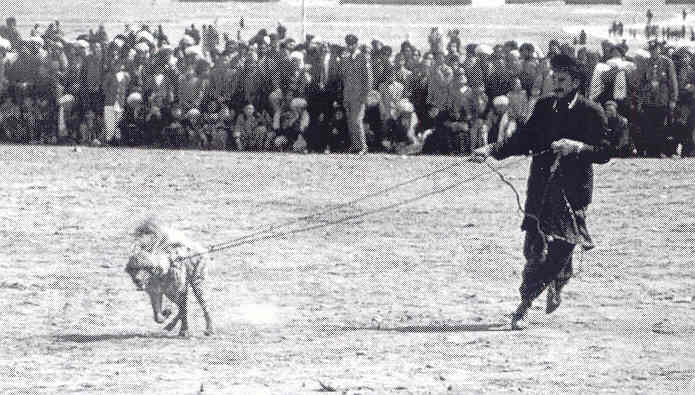
A striped hyaena being introduced in the ring before a public fight against a strong, specially trained dog. Until recently, this was common practice in Afghanistan and Pakistan. Source Frembgen (1998).
Hyaenas also deserve protection because they perform valuable services in the ecosystems they inhabit, and because they are essential indicators of ecosystem health throughout much of their range. Aardwolves consume termites, which can be terribly destructive, and the three species of bone-cracking hyaenas all facilitate energy transfer and cycling of nutrients between biotic and abiotic portions of the ecosystems in which they live. Spotted hyaenas are by far the most abundant large carnivores on the African continent, and they are keystone predators in most of the ecosystems in which they occur (Mills & Hofer 1998). A keystone predator is any animal feeding at the highest trophic level in a particular ecosystem, whose removal from that ecosystem results in a cascade of deleterious events at multiple trophic levels that lead ultimately to habitat destruction. Spotted hyaenas appear to be the large carnivores in Africa with the greatest behavioral plasticity, and they are relatively easy to monitor. Because spotted hyaenas usually occur sympatrically with other members of the hyaena family and many other carnivore species, they offer a protective “umbrella,” under which, if these animals are conserved, then so too will be the other hyaenas living in the same habitats. Spotted hyaenas offer us a very conservative indicator of ecosystem health. That is, because they can survive under conditions no other large carnivore can tolerate, their disappearance from an ecosystem indicates that the habitat has become very severely degraded, perhaps irreversibly. However, in areas where these hyaenas still occur, their behavior and demography can be monitored to reveal warning indications of deleterious trends. If such trends can be identified and quantified, they can potentially be halted or reversed. This is particularly important in Africa, where loss of large carnivores would remove an important incentive for tourists to visit from abroad. Loss of revenues from tourism would thus also remove a key source of foreign exchange for many developing nations in sub-Saharan Africa.
B) Current threats to hyaena conservation
Direct human-induced mortality: Although lions have historically represented the primary source of mortality for hyaenas, this situation is rapidly changing as human population density increases near remaining wilderness areas. In many parts of Africa, humans now kill more hyenas than any other mortality source. They do this by means that are both intentional and unintentional.
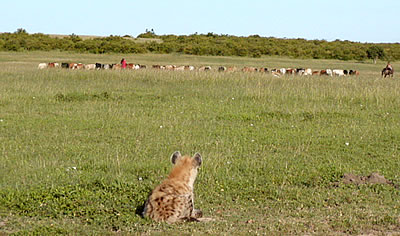
A spotted hyaena watches pastoralists with their cattle in the Masai Mara National Reserve, Kenya.
Extermination efforts in retaliation for attacks on livestock: In many parts of Africa, both local tribesmen and white ranchers alike commonly retaliate, using one of the methods listed below, against hyaenas that kill or damage livestock. The extent to which this form of direct human-caused mortality also negatively affects hyaena conservation in Asia is not currently known.
Snaring: In many rural parts of Africa, local pastoralists capture hyaenas using wire nooses set at small openings in the fences forming their livestock corrals. If a hyaenas blunders into such a snare, then the tribesmen rush out and kill the captured hyaena using spears or clubs.
-cropped.jpg)
A wire snare cuts into the neck of a spotted hyaena in Kenya. The hyaena has been anesthetized, but was released at its site of capture after this snare was removed.
Poisoning: To retaliate against incidents of livestock depredation by hyaenas, people in some parts of Africa saturate the carcass of a goat or cow with fast-acting poison, and leave this out for hyaenas to feed on during the night. Such use of poison can result in the deaths, not only of large numbers of hyenas simultaneously, but also in the inadvertent deaths of other sympatric carnivores. Mass poisoning of this sort has been documented for spotted hyaenas living in eastern Africa (Holekamp & Smale 1992), but this source of mortality may also be common in other parts of Africa.
Shooting: Many ranchers keep rifles close at hand and they often use these to kill any hyaenas seen on their property.
Sport hunting: Although this is not a major source of hyaena mortality, some spotted hyaenas are shot each year in various parts of Africa by sport-hunters.
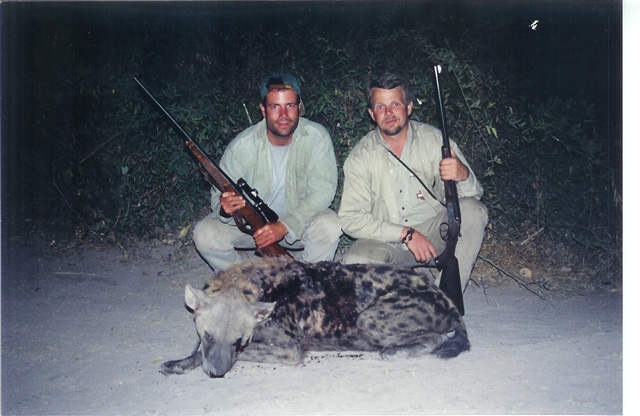
Sport-hunters with spotted hyaena 'trophy.'
Inadvertent mortality via road kill: Hyaenas of all types are commonly killed on motor-ways. They are sometimes hit while crossing roads, but the threat vehicles pose for hyaenas is exacerbated by the fact that they often attempt to feed on carrion produced by road-kills of other species. Feeding on such carrion commonly puts them directly in the path of oncoming cars.
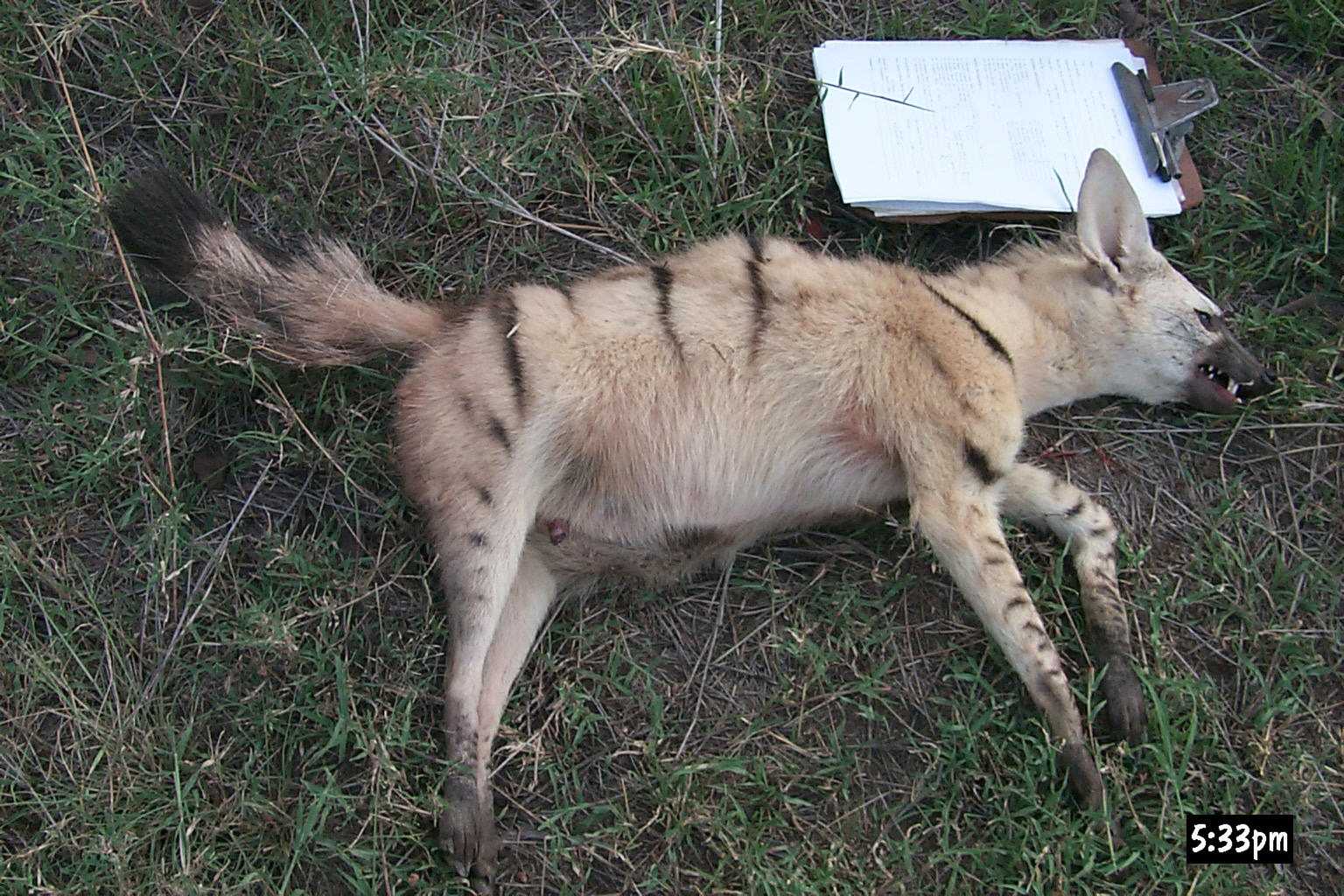
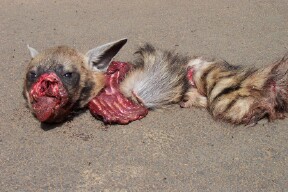
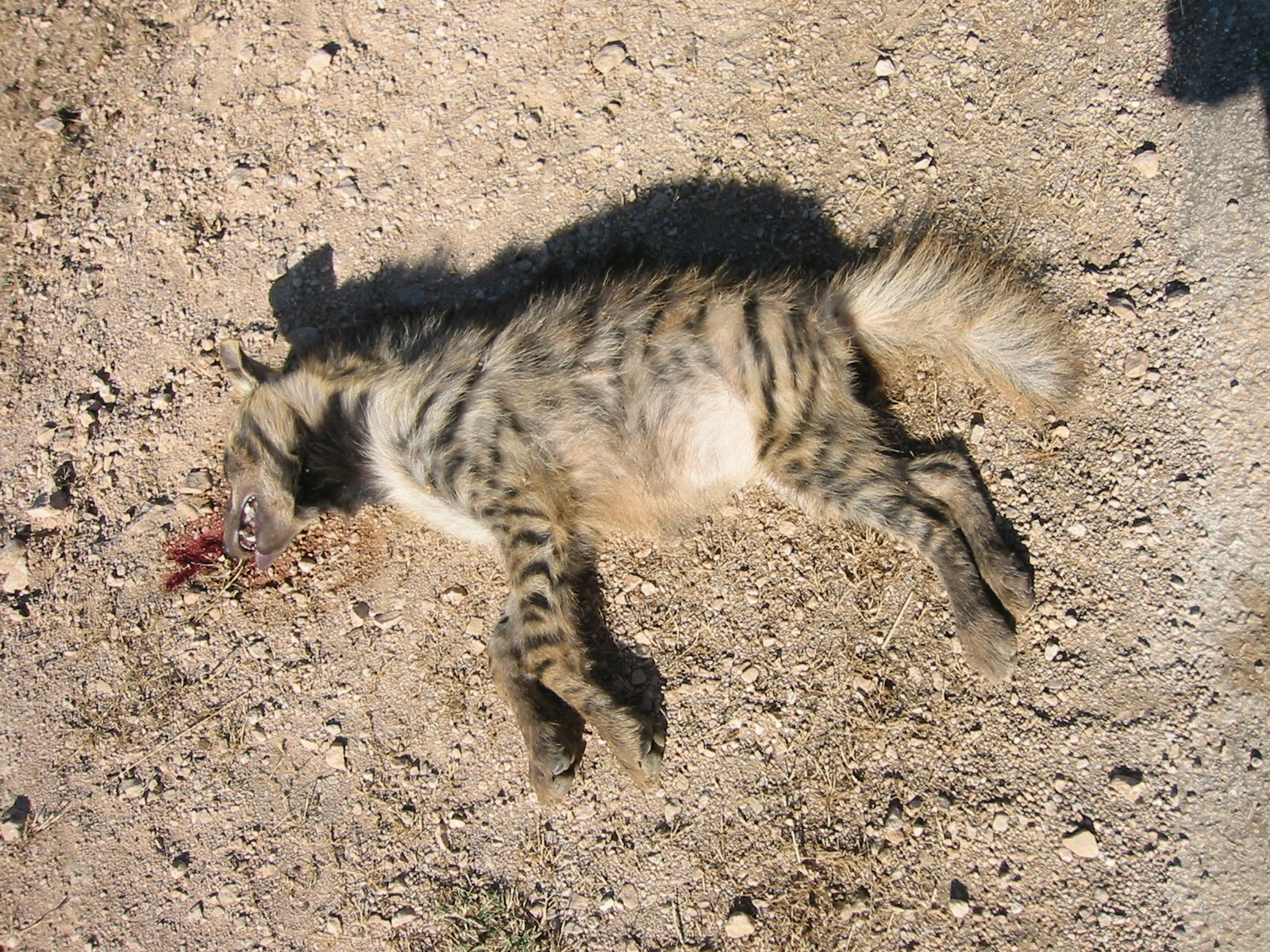
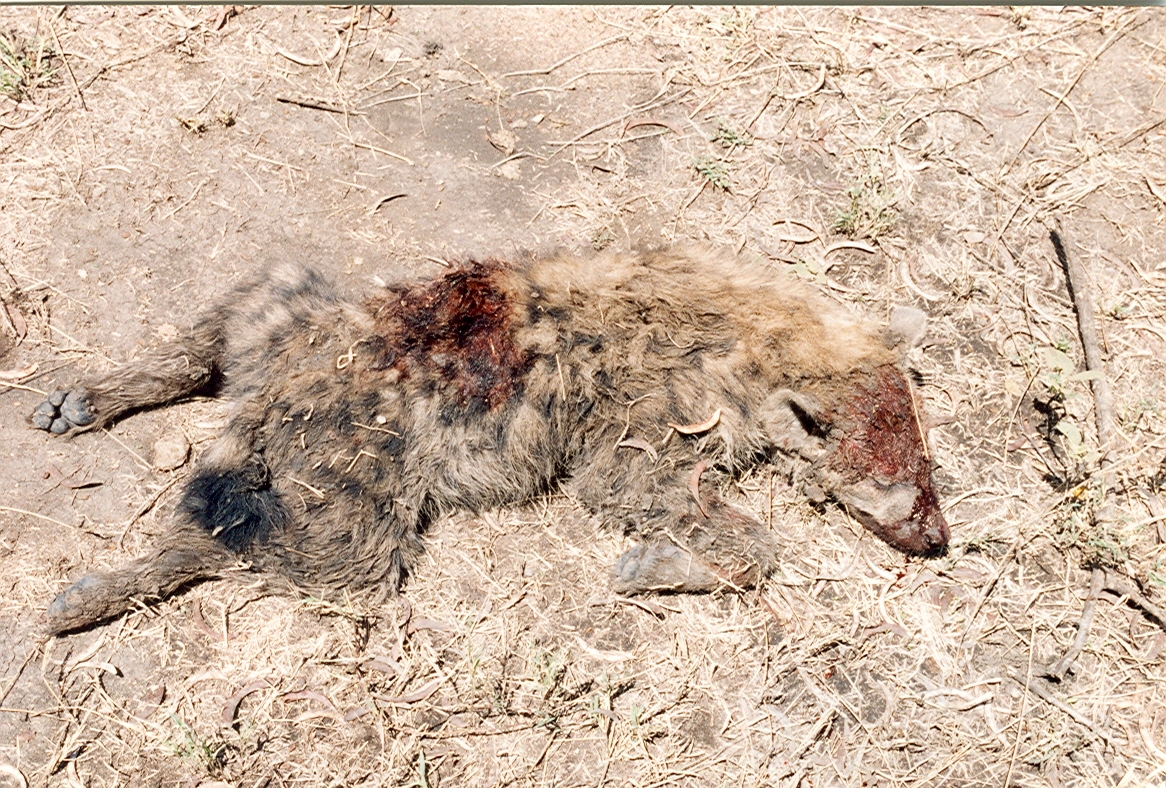
Hyaenas killed on roads in Africa and the Middle East.
Inadvertent mortality resulting from war: We have no way to estimate the mortality to striped hyaenas caused inadvertently by explosives, etc, in war-torn parts of the middle east, but this may be considerable. The same is likely to be true of mortality for striped hyaenas and spotted hyaenas in conflict areas in Somalia and Ethiopia.
Inadvertent mortality as a by-product of bush-meat hunting: Members of a number of Africa tribes make their living by capturing herbivores in snare-traps, and then selling the meat harvested from these animals. They usually set their snares along the narrow trails that herbivores take through dense vegetation. As hyaenas often use these same trails, they are often captured inadvertently in snares. Some manage to escape by biting through the wire forming the snare, but others are killed when the bush-meat hunters come by to check their traps. Still other hyaenas cut themselves free but die later as the snare slowly tightens and strangles them.
Hyaenas in the pet trade: Hyaenas are sometimes captured for sale in the pet trade in Africa, but this is most problematic in Asia. Contrary to what you might suspect based on their appearance as infants, hyaenas do not make good pets. They can be highly destructive of furniture and other objects in their immediate environment, and possess teeth and jaws that can also do a great deal of damage to their owners
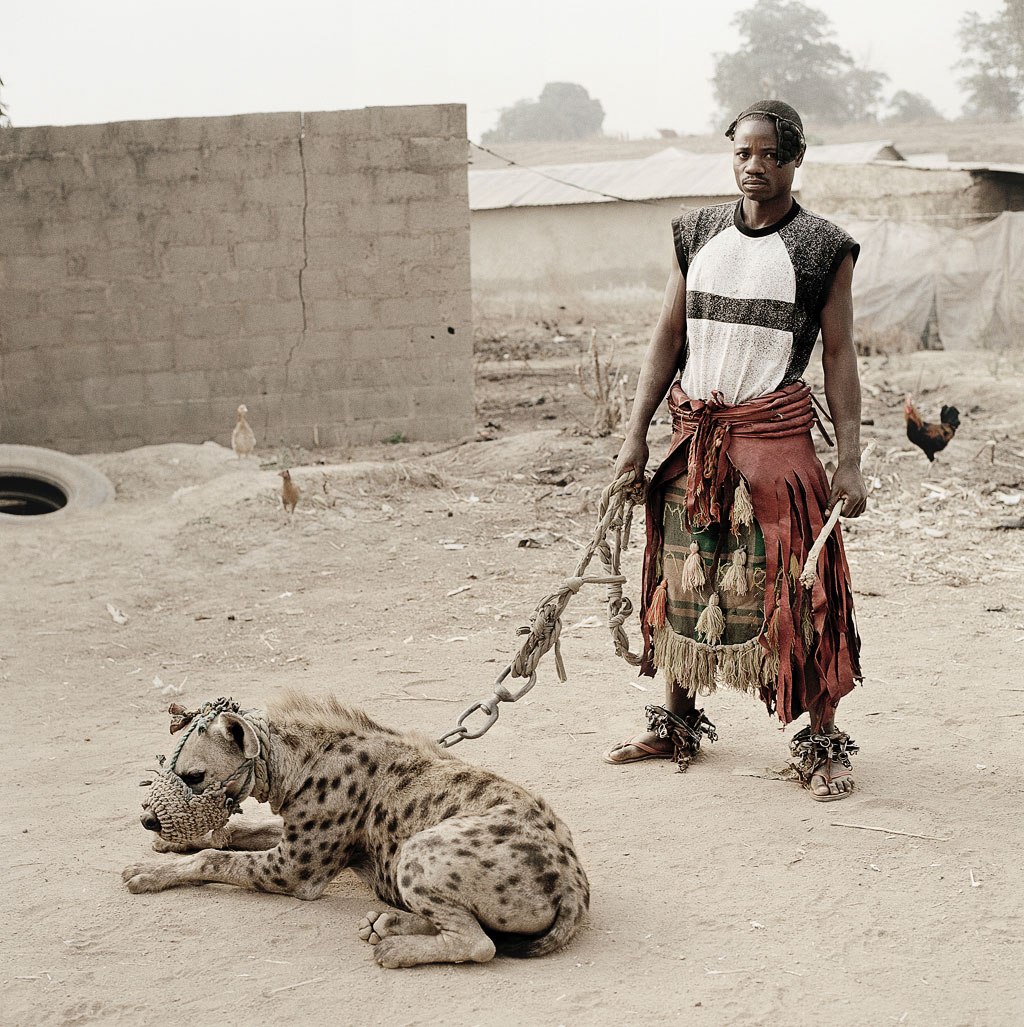
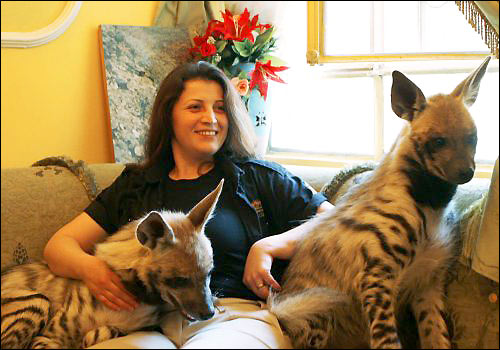
Left; Nigerian with his pet spotted hyaena; Right: Striped Hyaena cubs kept as pets in Syria.
Habitat loss & anthropogenic activity: Habitat loss is having a major impact on the range size of all four extant members of the hyaena family. Specifically, if the ranges of the four hyaena species are compared between the late 1990s and a few decades earlier, rather shocking range contraction can be observed as more and more habitat becomes unsuitable for hyaena habitation. The 1998 Survival Plan for the Hyaenidae shows exactly how hyaena species ranges have decreased in size in recent decades. Recent work has found that anthropogenic activity has significant effects on the behavior of spotted hyaenas (Boydston et al 2003; Kolowski et al. 2007). It may well be possible to use behavioral changes in monitored hyaena populations to anticipate and avoid population crashes, and research on this possibility is currently under way.
Ignorance and misconceptions: More myths have arisen in regard to hyaenas than perhaps any other animal in Africa (Glickman 1995). They are portrayed in a negative light in Western art and literature, they are mocked and derided by Hollywood producers, and they are feared and hated by many Africans today. This dark public image, born largely of ignorance, currently represents one of the most serious obstacles to the conservation of spotted and other hyenas (Mills & Hofer 1998). Hyaenas are killed to obtain body parts used in aphrodisiacs and medicines unlikely to have any medicinal value at all beyond a minor placebo effect. Young hyaenas are captured for sale as pets when in fact they will generally have to be given up for adoption or euthanized as soon as they reach full size. Most importantly, many people persist in their false belief that hyaenas are “bad” animals, or at least in the belief that hyaenas are not worthy of conservation efforts. Especially given that the four remaining hyaena species represent the last members of a lineage that was once large and diverse, we must attempt to put these false impressions behind us in order to enhance public enthusiasm for protecting these fascinating creatures.
C) What needs to be done to conserve hyaenas?
Education: Members of the Hyaena Specialist Group believe that major efforts must be undertaken to educate people about hyaenas in order to conserve these wonderful animals. Until people come to realize that these animals are both fascinating and unique, we will continue to face an uphill battle as we fight to conserve them.
Research: Before we will be able to effectively conserve members of the hyaena family, there are many things we need to know about their basic biology, as all but the spotted hyaena remain quite poorly understood. The biology of striped hyaenas, in particular, is largely unknown. Although we now know a great deal about the basic biology of the spotted hyaena, our understanding remains poor in regard to the limits of behavioral plasticity in this fascinating species. Most important is the need to assess whether or not this behavioral plasticity is likely to protect them from extinction.
Identification of the factors causing declines in populations of hyena prey species or species with which hyaenas compete for food (contributed by S. M. Dloniak): Among wildlife managers and also among conservaiton biologists interested in protecting species on which hyaenas feed or with which they compete for resources, there is currently a common tendency to assume that culling of hyaenas will protect the prey or competing carnivores. Whereas it is certainly true that hyaenas can and do exert direct and indirect effects on sympatric species, we are unaware of any data demonstrating that hyaenas cause extinction of, or even severe declines in, populations of competing carnivore or herbivore prey species. In some cases hyaenas are used as scapegoats for the decline or poor recruitment in populations of threatened species, when the root causes are more likely to be anthropogenic. In many such cases, management decisions to cull hyenas are not based on data identifying the factors causing declining populations of herbivores or carnivores that compete with hyaenas. Thus hyaenas are often being culled for inappropriate reasons.
D) Ongoing research germane to hyaena conservation
Hyaena biologists Hans Kruuk (1972) and Gus Mills (1990) have performed classic multi-year field studies of the basic behavioral ecology of spotted and brown hyaenas, and presented their findings in books. A substantial number of other biologists have also published highly informative papers on these species, usually based on shorter-term studies. Long-term field studies, both started in the late 1980s, are currently underway on spotted hyaenas in Kenya (based at Michigan State University, USA) and Tanzania (based at the Institute for Zoo and Wildlife Research, Germany), and one major thrust of both these projects is hyaena conservation. Furthermore, research projects are currently underway on Brown hyaenas in southwestern Africa, and on striped hyaenas in both Africa and Asia. More information about these efforts can be found on project web sites and on other pages of this web site.
E) Species-specific information regarding status and conservation

A 1960s stamp from Afghanistan showing a striped hyaena.